
How Search Engine Marketing Helps Businesses Get More Leads in 2026
In today’s competitive digital landscape, attracting the right customers is just as important as having an online presence. Many businesses invest in websites and digital marketing but struggle to generate consistent enquiries and sales. This is where Search Engine Marketing Services can help. By targeting relevant search queries and reaching people actively looking for products or services, businesses can connect with potential customers at the right moment. A well-planned search engine marketing strategy can improve online visibility, attract qualified website traffic, and encourage visitors to take action. In 2026, businesses need focused campaigns, relevant advertisements, and optimized landing pages to turn search traffic into valuable leads.

MI Tech Admin
Content Writer
Share this article
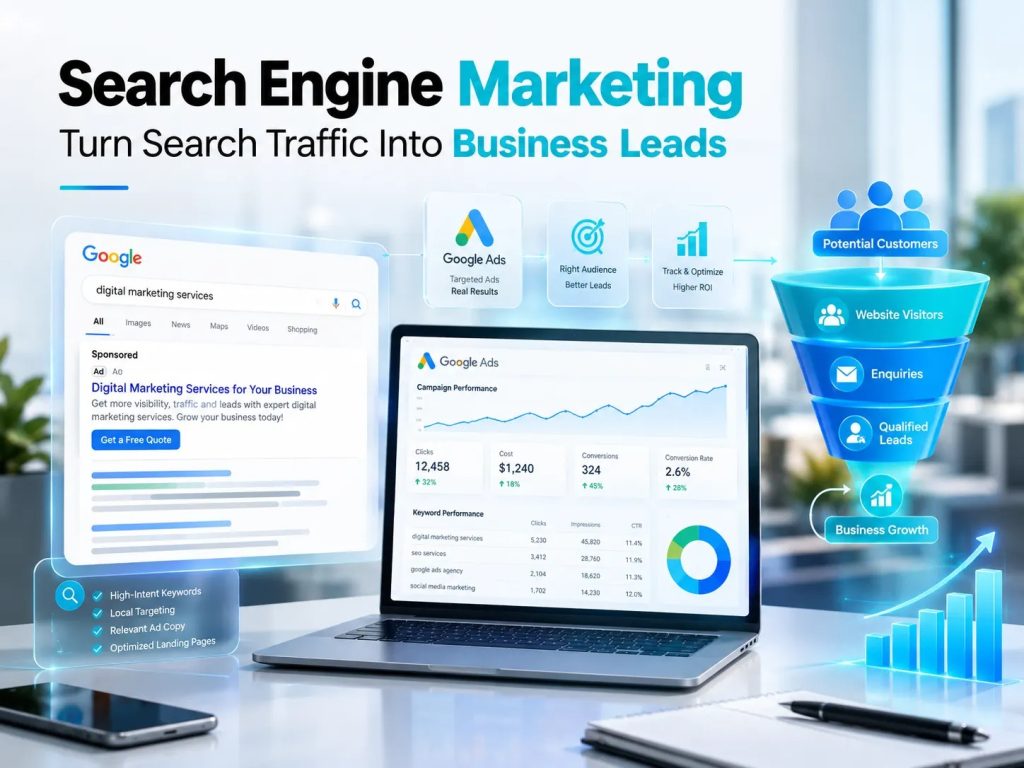
What Is Search Engine Marketing (SEM)?
Search Engine Marketing (SEM) is a digital marketing approach that helps businesses gain visibility on search engine results pages through paid advertising. For example, when someone searches Google for a service, sponsored advertisements may appear above or below organic results. Businesses can use these placements to reach relevant audiences and promote their offerings.
Paid search advertising generally works through platforms such as Google Ads, where advertisers select keywords, create advertisements, and set campaign budgets. Depending on the campaign and auction, they may pay when someone clicks an advertisement.
Unlike Search Engine Optimization (SEO), which focuses on improving unpaid search visibility, paid search campaigns can provide visibility while advertisements are running and eligible to appear. Both approaches can support a broader digital marketing strategy.
How Does Search Engine Marketing Help Businesses Generate More Leads?
Search engine marketing lead generation focuses on attracting people who are more likely to become customers. Instead of reaching a broad audience without knowing their immediate needs, businesses can target searches related to their products, services, and solutions.
Here are several ways SEM can support lead generation:
- Reach interested customers: Target searches that indicate a user is researching or considering a purchase.
- Improve online visibility: Display relevant advertisements when eligible users search for related products or services.
- Target specific locations: Reach potential customers in selected cities, regions, or service areas.
- Generate enquiries: Direct visitors to pages where they can call, submit a form, request a quotation, or book a consultation.
- Measure campaign results: Track clicks, conversions, and cost per lead to understand campaign performance.
However, generating leads requires more than simply running advertisements. Relevant keywords, persuasive ad copy, useful landing pages, and accurate conversion tracking all contribute to campaign effectiveness. Businesses should also evaluate lead quality, because a high number of enquiries does not necessarily mean more sales.
7 Search Engine Marketing Strategies to Get More Leads in 2026
Effective search engine marketing strategies focus on reaching the right audience, using advertising budgets efficiently, and making it easy for potential customers to enquire.
1. Target High-Intent Search Keywords
Choose keywords that reflect what potential customers want to achieve. Searches such as “hire a digital marketing agency” or “website development services for businesses” may indicate stronger commercial intent than broad informational searches. Organize keywords by relevance and campaign goals. Review actual search terms regularly to identify opportunities and avoid spending on irrelevant queries.
2. Write Compelling and Relevant Search Ads
Your advertisements should clearly explain what you offer and why it is relevant to the search. Write specific headlines, helpful descriptions, and appropriate calls to action. Highlight genuine benefits, such as tailored solutions or a consultation, without making unsupported promises. Ensure the advertisement matches the content of the destination page.
3. Optimize Landing Pages for Conversions
A landing page should make the next step clear. Use a relevant heading, concise service information, visible contact details, and an easy-to-complete enquiry form. Keep the page mobile-friendly and remove unnecessary distractions. A good landing page helps visitors understand your offer and decide whether to contact your business.
4. Use Location Targeting to Reach Relevant Customers
Location targeting can help businesses focus advertising on the areas they serve. For example, a Pune-based service provider may create campaigns for relevant customers in Pune and Pimpri-Chinchwad. Select locations based on your actual service coverage, business goals, and campaign data. Location targeting can improve relevance, but results depend on demand, competition, and other campaign factors.
5. Track Calls, Form Submissions, and Conversions
Clicks alone cannot tell you whether an advertising campaign is generating business. Set up conversion tracking for meaningful actions such as completed enquiry forms, qualified phone calls, or consultation bookings. Check that tracking works correctly and complies with applicable privacy requirements. Reliable data helps businesses identify which campaigns contribute to their lead-generation goals.
6. Review Search Terms and Add Negative Keywords
Search terms reveal the queries that trigger your advertisements. Review them to identify irrelevant traffic and add suitable negative keywords. For example, a business selling paid professional services might exclude searches that clearly indicate a desire for free alternatives, when appropriate. Regular reviews can reduce wasted spending and help campaigns focus on more relevant prospects.
7. Monitor Campaign Performance and Optimize Budgets
Successful campaigns require ongoing monitoring. Review conversion rates, cost per lead, search terms, advertisement performance, and lead quality. Adjust bids, budgets, keywords, and landing pages based on reliable evidence rather than assumptions. Google Ads management services can help businesses maintain this process through structured campaign analysis and continuous optimization.
The goal is not simply to receive more clicks. It is to attract relevant visitors and turn a reasonable proportion of them into qualified enquiries.
SEM vs SEO: Which Is Better for Lead Generation?
Search Engine Marketing and Search Engine Optimization help businesses reach potential customers through search, but they work differently. SEM commonly refers to paid search advertising, which can generate visibility while campaigns are eligible to run. SEO focuses on improving organic rankings through useful content, technical improvements, and website authority.
For businesses that need to test offers or reach customers quickly, paid search can be useful. SEO can support sustainable organic visibility over time, although results are not guaranteed and may take time to develop.
Neither approach is automatically better for every business. The right choice depends on budget, competition, customer behaviour, and business objectives. Combining search engine marketing and SEO can help businesses reach audiences through both paid and organic search results.
How Small Businesses Can Generate Leads Using Google Ads
Small businesses can use Google Ads to reach potential customers without advertising to everyone. Start by defining a clear goal, such as receiving qualified enquiries or phone calls. Select relevant keywords, establish a manageable budget, and write advertisements that reflect your services. Direct users to a useful landing page with a clear call to action.
Track conversions and review the quality of enquiries before increasing spending. Businesses should also monitor search terms and pause underperforming elements when the data supports a change. A focused campaign can provide useful insights, but results depend on market demand, competition, budget, and execution.
How to Measure Search Engine Marketing Results
Measuring search engine marketing campaign performance helps businesses understand whether advertising spending is producing useful outcomes.
Important metrics include:
- Click-through rate (CTR): The percentage of impressions that result in clicks.
- Cost per click (CPC): The average amount paid for each advertising click.
- Conversion rate: The percentage of visitors who complete a desired action.
- Cost per lead (CPL): The advertising cost associated with generating a lead.
- Lead quality: How relevant and likely an enquiry is to become a customer.
Review these metrics together rather than relying on clicks or impressions alone. A campaign that generates fewer but better-qualified leads may be more valuable than one producing many irrelevant enquiries. Where possible, connect advertising data with sales outcomes to understand the contribution of campaigns to business growth.
Want to Grow Your Business Online
Get a Free Consultation From Our Digital Marketing Expert
Frequently Asked Questions
1. How does search engine marketing help businesses generate more leads?
Search engine marketing helps businesses reach people searching for relevant products or services. By targeting suitable keywords, creating useful advertisements, and directing visitors to optimized landing pages, companies can encourage enquiries and calls. Conversion tracking then helps identify which campaigns generate leads and where improvements are needed.
2. How much do search engine marketing services cost in India?
The cost of search engine marketing services in India depends on advertising budget, industry competition, targeting, and campaign complexity. Businesses may also pay professional management fees. Before starting, define your goals, establish a realistic budget, and clarify reporting and optimization services. Actual costs and results vary by campaign.
3. Is search engine marketing better than SEO for lead generation?
Search engine marketing can deliver paid search visibility while campaigns are eligible to run, whereas SEO focuses on improving organic visibility over time. The better option depends on your budget, goals, competition, and timeline. Many businesses combine both approaches to attract potential customers through paid and organic search.
4. How can small businesses generate leads using Google Ads?
Small businesses can start with a clear conversion goal, relevant search keywords, compelling advertisements, and a focused landing page. Set a manageable budget and track calls or enquiry forms. Review search terms and lead quality regularly, then adjust campaigns using performance data instead of increasing spending without evidence.
5. How long does it take to get leads from search engine marketing?
Search engine marketing campaigns may generate enquiries soon after launch, provided they are approved, eligible, and reaching relevant searches. However, lead volume and quality depend on competition, budget, targeting, and landing-page performance. Allow time to collect reliable data, verify conversions, and optimize campaigns before judging overall effectiveness.
Turn Search Traffic Into Business Leads With MI Tech Solutions
Generating leads through search requires a clear strategy, relevant keywords, compelling advertisements, optimized landing pages, and accurate performance tracking. Businesses that regularly evaluate their campaigns can identify opportunities to improve efficiency and attract more relevant enquiries.
MI Tech Solutions helps businesses plan and manage search campaigns around their marketing objectives. Explore our Search Engine Marketing Services to learn how a structured paid search strategy can support your business’s online visibility and lead-generation goals.