
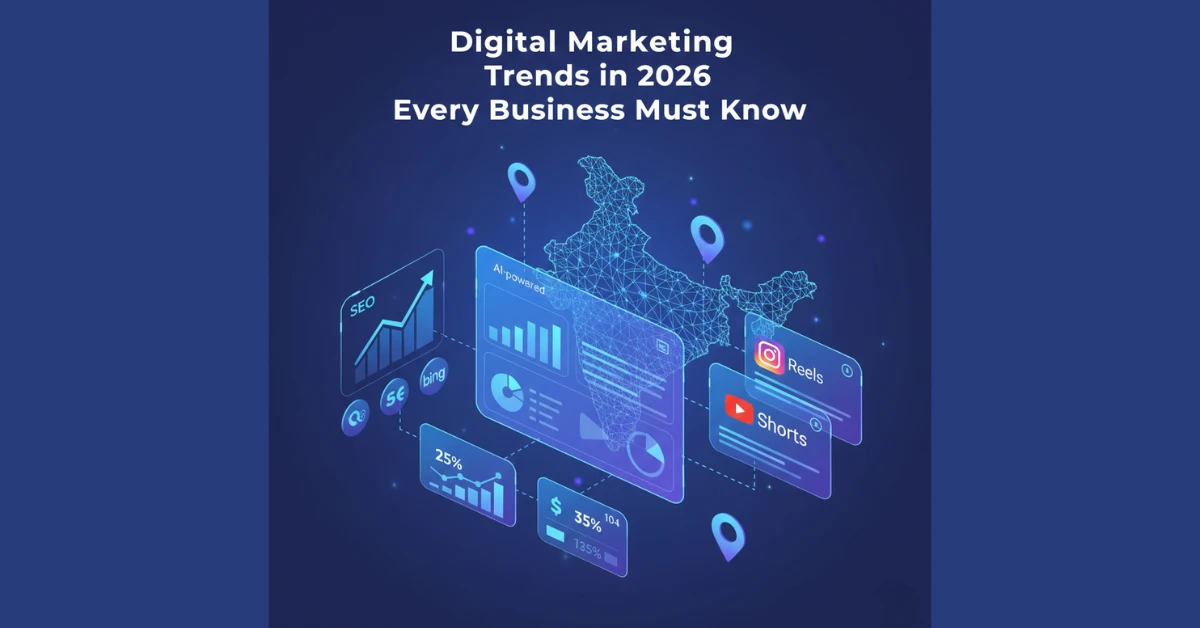
Digital marketing is evolving rapidly, and businesses that fail to adapt risk losing visibility, trust, and customers. The digital marketing trends in 2026 highlight a major shift in how people discover brands, interact online, and make buying decisions across AI search engines, social media, short-form videos, and local platforms.
For startups, entrepreneurs, and growing businesses in India, understanding these changes is essential. Companies like MI Tech Solutions help brands succeed by focusing on sustainable, long-term digital strategies. This blog explores the key trends shaping the future of digital marketing and how businesses can apply them effectively.
1. AI Tools Enhancing Digital Marketing Efforts
Artificial Intelligence has become a powerful support system for marketers in 2026. AI tools assist with data analysis, content planning, customer insights, and advertising optimization. However, AI does not replace human decision-making, creativity, or strategic thinking.
Successful businesses use AI to improve efficiency while maintaining a human touch in messaging and branding. AI helps marketers understand customer behavior, predict trends, and personalize experiences at scale.
What businesses should do:
- Use AI for research, automation, and performance tracking
- Combine AI insights with human creativity
- Focus on meaningful engagement, not automated content
AI-driven marketing works best when aligned with clear goals and customer needs.
2. Smarter SEO Focused on User Intent
SEO remains one of the strongest long-term growth strategies, but it has evolved significantly. In 2026, search engines prioritize content that is helpful, easy to understand, and aligned with user intent. Ranking is no longer about repeating keywords but about answering real questions clearly.
Modern SEO also includes visibility across AI search tools, voice search, and featured snippets. Businesses that create structured, high-quality content perform better across platforms.
What businesses should do:
- Answer specific customer questions
- Use simple language and logical headings
- Optimize for mobile users and fast-loading pages
- Include related and contextual keywords naturally
Smarter SEO improves trust, engagement, and organic visibility.
3. Building Brand Trust and Online Authority
Brand trust has become a major ranking and conversion factor. Users and search engines prefer brands that demonstrate expertise, consistency, and transparency. Businesses with strong online authority experience better organic rankings and lower advertising costs.
Authority is built through consistent branding, expert content, and authentic customer interactions. Publishing valuable information positions businesses as reliable sources in their industry.
What businesses should do:
- Maintain consistent brand messaging across platforms
- Collect genuine customer reviews and testimonials
- Share educational blogs, guides, and insights
- Demonstrate expertise through real-world examples
Trust-driven digital marketing creates long-term customer loyalty.
4. Instagram Reels & YouTube Shorts: The Power of Short-Form Video
Short-form video content is one of the most effective ways to reach audiences in 2026. Platforms such as Instagram Reels, YouTube Shorts, and Facebook videos help businesses communicate quickly and clearly.
Short videos are ideal for explaining concepts, showcasing products, and sharing quick tips. They also improve reach and engagement without requiring large budgets.
What businesses should do:
- Create short, informative, and engaging videos
- Focus on education, demonstrations, and storytelling
- Maintain consistency in posting
- Optimize videos with captions and keywords
Video marketing supports brand awareness and audience connection.
5. Performance-Based Digital Advertising
Digital advertising has become more results-oriented than ever. Businesses now measure success through leads, conversions, and return on investment rather than likes or impressions.
Advertising platforms use advanced data and AI to improve targeting, making regular optimization essential. Businesses that track performance accurately achieve better outcomes with lower costs.
What businesses should do:
- Set clear conversion goals
- Monitor and optimize campaigns regularly
- Focus on high-quality leads
- Use remarketing to re-engage interested users
Performance-based advertising ensures measurable growth.
6. Local SEO and High-Intent Searches
Local SEO plays a critical role for service-based and location-focused businesses. Customers searching for nearby services often have high purchase intent, making local visibility extremely valuable.
Optimizing local listings helps businesses attract customers who are ready to take action.
What businesses should do:
- Optimize Google Business Profile regularly
- Use city- and area-specific keywords
- Encourage customer ratings and reviews
- Keep business information consistent online
Local search optimization drives targeted traffic and conversions.
Conclusion:
The digital marketing trends in 2026 highlight a clear shift toward trust, quality, and user-focused strategies. Businesses that rely solely on outdated tactics or keyword repetition will struggle to stay visible. Success now depends on combining AI tools, smarter SEO, short-form video content, performance-based advertising, and a strong local presence.
By focusing on authority, meaningful engagement, and data-driven decisions, businesses can build long-term growth and competitive advantage. Adapting early to these changes ensures sustainable success in the evolving digital landscape.